


WOLFGANG AMADEUS MOZART
He composed more than 600 works, many of which are acknowledged as pinnacles of symphonic, concertante, chamber, operatic, and choral music. He is considered among the greatest classical composers of all time,[1][2] and his influence on Western music is profound. Ludwig van Beethoven composed his early works in the shadow of Mozart, and Joseph Haydn wrote: "posterity will not see such a talent again in 100 years
LUDWIG VAN BEETHOVEN
His first major orchestral work, the First Symphony, appeared in 1800, and his first set of string quartets was published in 1801. During this period, his hearing began to deteriorate, but he continued to conduct, premiering his Third and Fifth Symphonies in 1804 and 1808, respectively. His Violin Concerto appeared in 1806. His last piano concerto, dedicated to his frequent patron Archduke Rudolf of Austria, was premiered in 1810, but not with Beethoven as soloist. He was almost completely deaf by 1814, and he then gave up performing and appearing in public. He described his problems with health and his unfulfilled personal life in two letters, his "Heiligenstadt Testament" (1802) to his brothers and his unsent love letter to an unknown "Immortal Beloved" (1812).

JOHANN SEBASTIAN BACH
ach enriched established German styles through his mastery of counterpoint, harmonic and motivic organisation, and his adaptation of rhythms, forms, and textures from abroad, particularly from Italy and France. Bach's compositions include hundreds of cantatas, both sacred and secular. He composed Latin church music, Passions, oratorios, and motets. He often adopted Lutheran hymns, not only in his larger vocal works, but for instance also in his four-part chorales and his sacred songs. He wrote extensively for organ and for other keyboard instruments. He composed concertos, for instance for violin and for harpsichord, and suites, as chamber music as well as for orchestra. Many of his works employ the genres of canon and fugue.

ANTONIO VIVALDI
Many of his compositions were written for the all-female music ensemble of the Ospedale della Pietà, a home for abandoned children. Vivaldi had worked there as a Catholic priest for 18 months and was employed there from 1703 to 1715 and from 1723 to 1740. Vivaldi also had some success with expensive stagings of his operas in Venice, Mantua and Vienna. After meeting the Emperor Charles VI, Vivaldi moved to Vienna, hoping for royal support. However, the Emperor died soon after Vivaldi's arrival, and Vivaldi himself died in poverty less than a year later.

CLAUDE DEBUSSY
Debussy's talents soon became evident, and in 1872, aged ten, he was admitted to the Conservatoire de Paris, where he remained a student for the next eleven years. He first joined the piano class of Antoine François Marmontel,[14] and studied solfège with Albert Lavignac and, later, composition with Ernest Guiraud, harmony with Émile Durand, and organ with César Franck.[15] The course included music history and theory studies with Louis-Albert Bourgault-Ducoudray, but it is not certain that Debussy, who was apt to skip classes, actually attended these.
FRANZ LISZT
In 1841, Franz Liszt was admitted to the Freemason's lodge "Unity" "Zur Einigkeit", in Frankfurt am Main. He was promoted to the second degree and elected master as a member of the lodge "Zur Eintracht", in Berlin. From 1845, he was also an honorary member of the lodge "Modestia cum Libertate" at Zürich and in 1870 of the lodge in Pest (Budapest-Hungary). After 1842, "Lisztomania"—coined by 19th-century German poet and Liszt's contemporary, Heinrich Heine—swept across Europe


GIACOMO PUCCINI
Puccini was born Giacomo Antonio Domenico Michele Secondo Maria Puccini in Lucca, Italy, in 1858. He was the sixth of nine children of Michele Puccini (1813–1864) and Albina Magi (1830–1884). The Puccini family was established in Lucca as a local musical dynasty by Puccini's great-great-grandfather – also named Giacomo (1712–1781).This first Giacomo Puccini was maestro di cappella of the Cattedrale di San Martino in Lucca.He was succeeded in this position by his son, Antonio Puccini, and then by Antonio's son Domenico, and Domenico's son Michele (father of the subject of this article).
_~1930_%C2%A9_Max_Fenic.jpg)
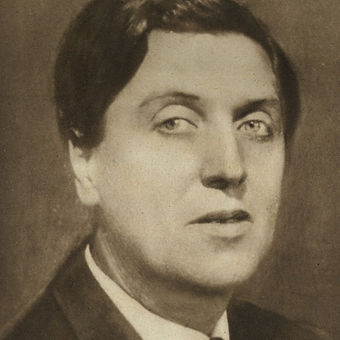
Alban Berg
Berg was born and lived in Vienna. He began to compose only at the age of fifteen. He studied counterpoint, music theory and harmony with Arnold Schoenberg between 1904 and 1911, and adopted his principles of developing variation and the twelve-tone technique. Berg's major works include the operas Wozzeck (1924) and Lulu (1935, finished posthumously), the chamber pieces Lyric Suite and Chamber Concerto, as well as a Violin Concerto. He also composed a number of songs (lieder). He is said to have brought more "human values" to the twelve-tone system, his works seen as more "emotional" than Schoenberg's. His music had a surface glamour that won him admirers when Schoenberg himself had few

Gioachino Rossini
Rossini's withdrawal from opera for the last 40 years of his life has never been fully explained; contributary factors may have been ill-health, the wealth his success had brought him, and the rise of spectacular grand opera under composers such as Giacomo Meyerbeer. From the early 1830s to 1855, when he left Paris and was based in Bologna, Rossini wrote relatively little. On his return to Paris in 1855 he became renowned for his musical salons on Saturdays, regularly attended by musicians and the artistic and fashionable circles of Paris, for which he wrote the entertaining pieces Péchés de vieillesse. Guests included Franz Liszt, Anton Rubinstein, Giuseppe Verdi, Meyerbeer and Joseph Joachim. Rossini's last major composition was his Petite messe solennelle (1863). He died in Paris in 1868.
Contents

Hector Berlioz
Berlioz completed three operas, the first of which, Benvenuto Cellini, was an outright failure. The second, the huge epic Les Troyens (The Trojans), was so large in scale that it was never staged in its entirety during his lifetime. His last opera, Béatrice et Bénédict – based on Shakespeare's comedy Much Ado About Nothing – was a success at its premiere but did not enter the regular operatic repertoire. Meeting only occasional success in France as a composer, Berlioz increasingly turned to conducting, in which he gained an international reputation. He was highly regarded in Germany, Britain and Russia both as a composer and as a conductor. To supplement his earnings he wrote musical journalism throughout much of his career; some of it has been preserved in book form, including his Treatise on Instrumentation (1844), which was influential in the 19th and 20th centuries. Berlioz died in Paris at the age of 65.